
- Vaitheeswaran Koil

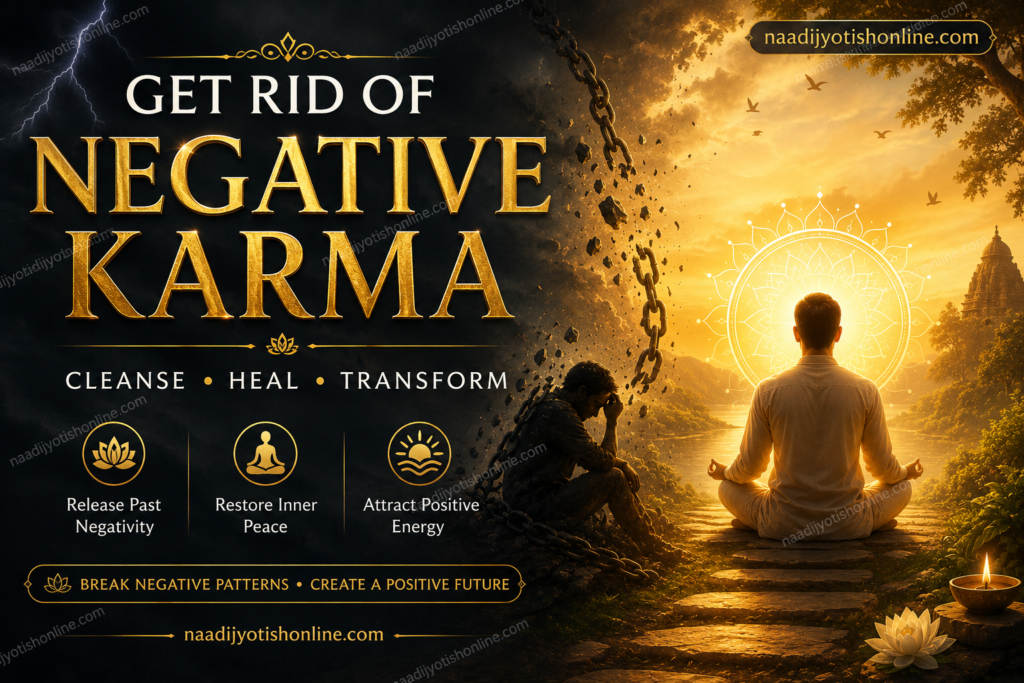
How to Get Rid of Negative Karma?
In Hindu spiritual traditions, karma is understood as the law of cause and effect—our thoughts, words, intentions, and actions can influence our experiences. Negative karma is often associated with actions that cause harm, dishonesty, selfishness, anger, or other forms of adharma.
The good news is that the past does not have to define your future. Through sincere self-reflection, righteous actions, devotion, and positive changes in daily life, a person can work toward reducing the influence of negative karma and creating a more positive path.
1. Accept Your Past and Learn From It
The first step is to recognize mistakes without becoming trapped in guilt or fear. Understand what went wrong, take responsibility, and make a sincere commitment not to repeat the same actions.
In Hindu traditions, genuine repentance and a change in behaviour are considered important aspects of spiritual purification.
2. Stop Creating New Negative Karma
Be mindful of your thoughts, words, and actions.
Avoid:
- Hurting others intentionally
- Lying and cheating
- Unnecessary anger and hatred
- Exploiting others for personal gain
- Deliberately causing harm
- Acting purely out of selfishness
Instead, choose truthfulness, compassion, patience, and integrity in your everyday life.
3. Practice Selfless Service
Seva, or selfless service, is an important spiritual practice. Helping people without expecting recognition or personal reward can cultivate compassion and humility.
You may help someone in need, feed the hungry, support a charitable cause, care for animals, or simply offer your time and skills to someone who needs them.
The Bhagavad Gita emphasizes performing one’s duties without attachment to the fruits of one’s actions—a principle commonly associated with Karma Yoga.
4. Pray and Develop Devotion
Regular prayer and devotion can help calm the mind and encourage positive transformation.
You may choose a form of worship that is meaningful to you and maintain a regular spiritual practice through prayer, meditation, chanting, temple worship, or reading sacred texts.
5. Practice Meditation
Meditation can help develop awareness, self-control, and inner calm. By observing your thoughts and emotions, you can gradually reduce anger, fear, attachment, and impulsive reactions.
A calmer mind makes it easier to choose positive actions instead of repeating harmful patterns.
6. Make Amends When Possible
If your actions have hurt another person, sincerely apologize and make amends where appropriate.
True spiritual transformation is not simply about performing a ritual—it also involves changing one’s behaviour and making better choices going forward.
7. Perform Charity and Good Deeds
Acts of generosity and compassion are traditionally encouraged as ways of cultivating positive qualities.
Give according to your ability, without expecting something in return. Even a small act of kindness performed with genuine intention can become part of a more positive way of living.
8. Follow Dharma
Living according to dharma means fulfilling your responsibilities with honesty, compassion, discipline, and integrity.
Instead of constantly worrying about what happened in the past, focus on making the right choices today. Every new action is an opportunity to create a better direction for your life.
Can Negative Karma Be Removed Completely?
Different Hindu traditions explain karma in different ways. It is therefore better to avoid the idea that one ritual can automatically erase all karma.
Spiritual practices such as prayer, devotion, selfless service, righteous living, repentance, meditation, and sincere transformation are traditionally regarded as ways of purifying one’s life and moving beyond negative patterns.
The most important principle is simple:
Change your actions, purify your intentions, serve others, seek divine grace, and walk the path of dharma.
Your past may have shaped your journey, but the choices you make today can shape your future.
Frequently Asked Questions
Nadi Astrology is traditionally used by practitioners to provide spiritual guidance based on ancient palm-leaf traditions. A reading may discuss challenges, life patterns, and traditional spiritual remedies associated with a person’s circumstances.
Negative karma refers to the consequences associated with harmful thoughts, words, intentions, and actions. In Hindu spiritual traditions, karma is connected with the principle of cause and effect.
Different Hindu traditions have different views on karma. Rather than thinking of karma as something that can simply be erased through one ritual, spiritual practices focus on transforming one’s actions, intentions, and way of life.
Practices traditionally associated with overcoming negative karmic patterns include sincere repentance, prayer, meditation, selfless service, charity, helping others, following dharma, and avoiding actions that cause harm.
Prayer and devotion are traditionally considered ways of seeking divine grace and developing inner strength. Regular prayer can also encourage positive thoughts, discipline, humility, and a more peaceful state of mind.
Selfless acts of kindness, charity, helping people in need, and serving others are traditionally encouraged as positive actions. The intention behind the action is also considered important.
Temple visits, prayer, worship, and spiritual practices can provide an opportunity for reflection and devotion. However, they are best understood as part of a broader spiritual journey rather than a guaranteed way to erase karma.
No spiritual remedy should be presented as a guaranteed solution. Traditional remedies are generally intended to support spiritual discipline, positive actions, devotion, and personal transformation.
The most important step is to consciously change your actions and intentions. Practice truthfulness, compassion, selfless service, forgiveness, devotion, and responsible living while avoiding actions that knowingly cause harm.
There is no fixed timeframe. Spiritual traditions generally view karma as a gradual process. Consistent positive actions and sincere inner transformation are more important than expecting immediate results.
Yes. A traditional Nadi Astrology consultation may provide spiritual guidance based on your individual circumstances and discuss traditional practices that may be recommended for your situation.